
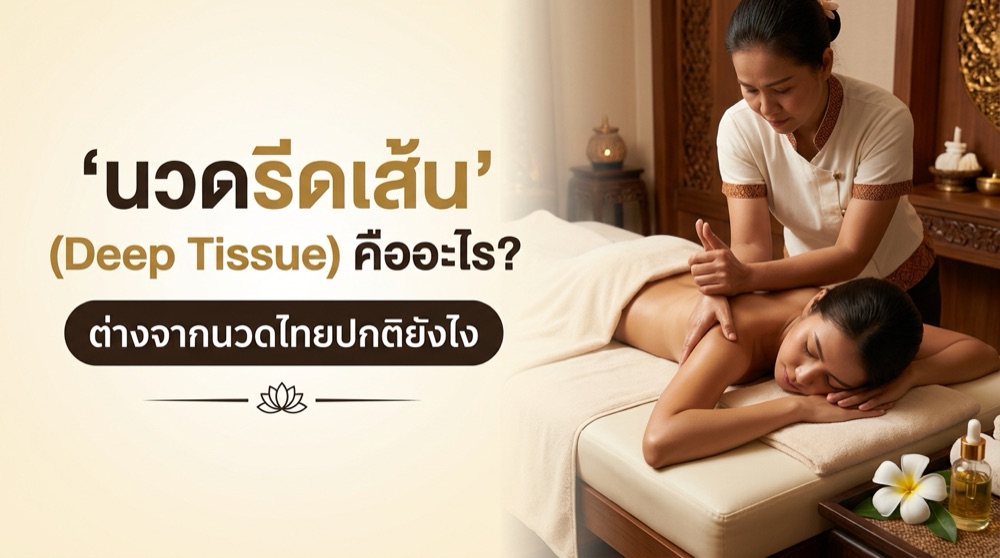
What Is Deep Tissue Massage? How It Differs from Traditional Thai Massage
If you suffer from chronic tightness in your neck, shoulders, shoulder blades, or lower back, you have probably heard therapists suggest "Ried Sen" or seen Deep Tissue Massage on a spa menu. Many people wonder what deep tissue massage actually involves, whether it hurts more than traditional Thai massage, and who benefits most from it. Here is a clear, practical guide.
What Is Deep Tissue Massage?
Deep tissue massage (often paired with Thai "Ried Sen" line-gliding techniques) targets the deeper layers of muscle and surrounding fascia (connective tissue). Using slower strokes and firmer, sustained pressure — delivered via thumbs, knuckles, forearms, or elbows — the therapist works methodically along tense muscle fibers to release stubborn knots and adhesions (trigger points).
Unlike dry Thai massage, therapists usually apply a light amount of massage oil or Thai herbal balm directly onto the skin so they can glide smoothly along deep muscle bands without pinching or irritating the skin.
How Does It Differ from Traditional Thai Massage?
- Technique & Movement — Traditional Thai massage combines rhythmic acupressure along Sen energy lines with assisted yoga-like stretching. Deep tissue massage focuses on slow, concentrated, sustained strokes deep into specific muscle bellies.
- Oil vs. Dry Clothing — Traditional Thai massage is performed fully clothed in loose cotton pajamas without oil, whereas deep tissue massage uses oil or balm directly on the skin.
- Primary Goal — Thai massage restores full-body flexibility and energy flow, while deep tissue massage zeroes in on breaking up localized, chronic muscle tension.
Key Benefits of Deep Tissue Massage
- Releases chronic muscle knots caused by desk work, long drives, or repetitive strain.
- Improves range of motion around stiff shoulders, neck, hips, and lower back.
- Boosts localized circulation, bringing fresh oxygen and nutrients to fatigued muscle tissue.
- Relieves built-up physical tension, leaving your body feeling lighter once recovery settles.
Who Should (and Shouldn't) Get Deep Tissue Massage?
Ideal for: People with persistent office syndrome, athletes with tight muscles, and experienced massage-goers who prefer firm, targeted pressure.
Precautions & Who Should Avoid It:
- Anyone with an acute muscle tear, sprain, swelling, or inflammation within the first 48–72 hours.
- People with severe osteoporosis or an actively inflamed herniated disc.
- Those taking blood thinners or with clotting/bleeding disorders.
- Pregnant women (opt for a specialized prenatal massage instead).
Tips for the Best Session
Always communicate openly with your therapist. Deep tissue work can feel intensely "good-sore," but if you feel sharp, shooting pain or find yourself holding your breath, ask for lighter pressure — tensing up works against the massage. Drink plenty of water afterward and avoid heavy workouts for 24–48 hours.
Book a Pre-Screened Deep Tissue Therapist
Ready to melt away stubborn knots with an experienced professional? On GoThaiMassage, you can browse and book pre-screened massage shops and independent therapists nationwide (✓ T-Verified / ✓ S-Verified), read real customer reviews, and filter by service, province, and price.