
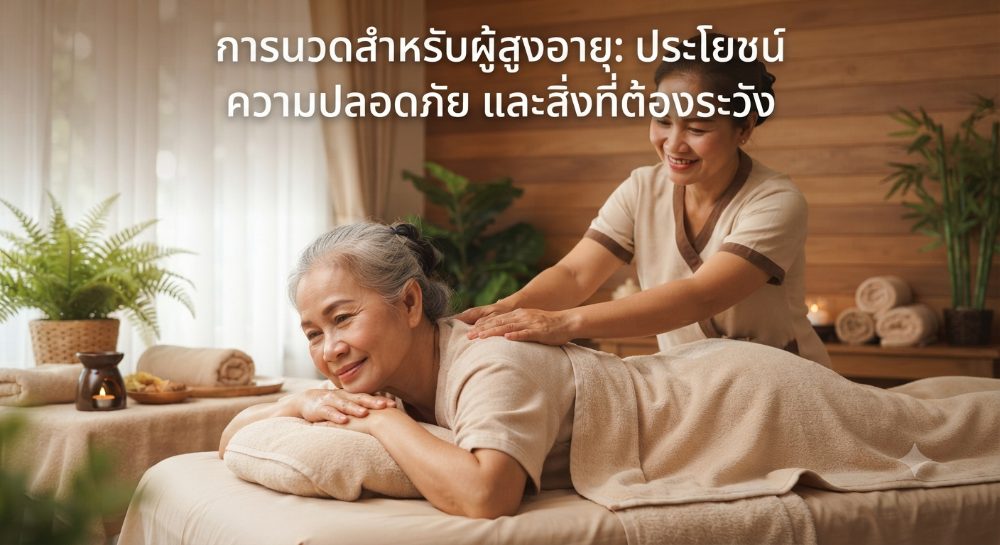
Massage for the Elderly — Benefits, Safety, and What to Watch For
As the years add up, a body that was once strong begins sending warning signals that younger people don't always understand. Knee pain, back pain, a stiff neck, tired aching muscles, or restless sleep become daily companions for many older adults. For that reason, quite a few children look to massage as a way to care for their aging parents at home, believing it will help them feel more comfortable and relaxed — and that belief is correct. It's just that massage for the elderly comes with details and cautions rather different from those for the general public, and they're worth understanding before taking a loved one for a session.
In terms of benefits, massage is a genuinely good form of health care for older adults, not merely muscle relaxation. As people age, circulation tends not to work as well as it once did, so massage helps stimulate better blood flow, which benefits the body as a whole. On top of that, most older adults carry accumulated chronic aches — back, legs, neck, and shoulders — and proper massage helps relieve these well, allowing them to move more freely and go about daily life more comfortably. Gentle touch and attentive care also help emotionally, easing the loneliness and stress that many older people quietly face while their children may overlook it.
That said, the single most important thing about massage for the elderly is safety, because what sets it apart isn't age itself but the illnesses and conditions that tend to come with age. Thai traditional medicine specialists always stress that age isn't the main factor in massage — it's the diseases that arrive with age that may become the limitation. The clearest example is osteoporosis, extremely common in older adults. Thinning, brittle bones make many massage moves — especially bending, pulling, or applying heavy pressure — forbidden positions that risk fractures or serious injury, particularly around the neck, spine, and ribs, which demand special caution.
Beyond osteoporosis, other conditions common in older adults all call for care. Those with high blood pressure need to be massaged with particular caution, because inappropriate massage can push their pressure higher. Moreover, if there's a bulging aortic aneurysm in the abdomen, pressing on the belly is absolutely forbidden, as it can be life-threatening. As for those with diabetes, the skin and sensation often change, so massage that's too forceful can cause bruising or soreness more easily than in others — and extra care is needed if heat is involved, such as a herbal compress, because people with diabetes respond slowly to heat and risk burns without realizing it.
There are several more conditions that are contraindications or cautions according to Thailand's Department of Thai Traditional and Alternative Medicine: a fever above 38.5°C, areas that are inflamed, swollen, red, or hot, people with abnormal blood clotting or fragile blood vessels, areas of recent surgery or bones not yet healed, and any area affected by cancer. All of these should be avoided or checked with a doctor first. So before taking an older person for a massage, it's wise to carefully assess their health and any conditions — and when in doubt, consulting the doctor who cares for them is the safest path.
When it comes to choosing a suitable style for older adults, gentle, soft massage is generally more appropriate than heavy pressure or forceful bending and pulling. Oil massage or light relaxation massage that emphasizes gliding strokes and stimulating circulation is often a safe, comfortable choice. Pressure-point work or deep traditional Thai massage, if done at all, should be in the hands of a therapist with the knowledge and experience to care for older adults specifically — one who can adjust their pressure and avoid the risky spots appropriately. Just as important, always tell the therapist about all of the person's conditions and symptoms before starting, so they can plan the massage safely.
Finally, it helps to see massage as just one part of caring for an older person's health, not a direct treatment for illness. If they have severe or chronic pain, or other unusual symptoms alongside it, seeing a doctor to find the real cause remains essential — because sometimes pain in older adults is a signal of a health problem needing more than a massage. But chosen correctly and safely, massage is a warm and valuable gift that children can give, helping their loved ones feel comfortable, at ease, and truly cared for.
If you're looking for a trustworthy therapist to care for an older person at home, on GoThaiMassage you can find and book pre-screened therapists and shops nationwide, checking real user reviews and ratings before deciding, filtering by service type, province, and price, with pre-screened therapists and shops (✓ T-Verified / ✓ S-Verified) — for peace of mind in caring for the ones you love.