
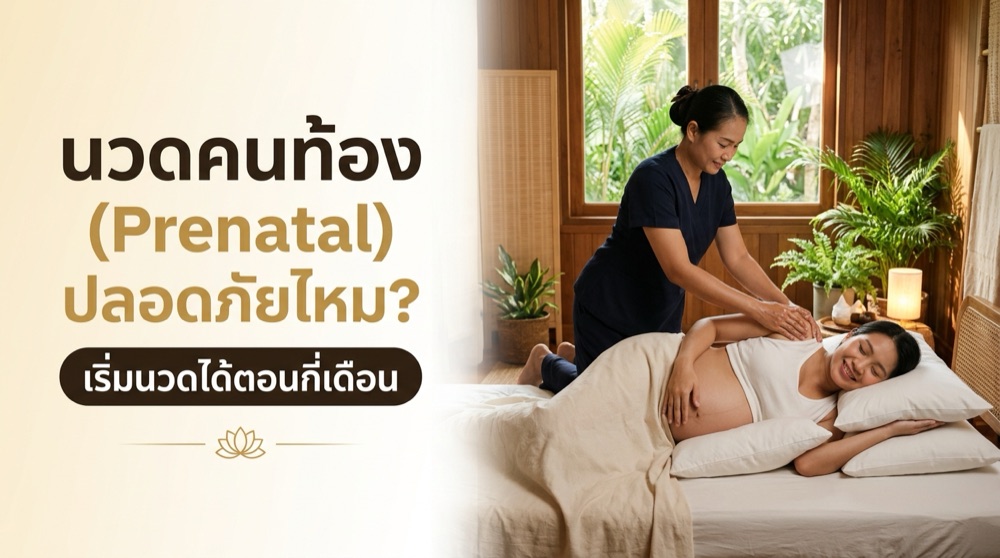
Is Prenatal Massage Safe? When to Start and Positions to Avoid
As pregnancy progresses, lower backache, hip tension, stiff shoulders, swollen ankles, and restless nights become all too common. Naturally, many expectant mothers look to massage for relief — yet the biggest question remains: Is prenatal massage safe for both mom and baby? Yes, when done at the right stage and with proper precautions. Here is everything you need to know before booking.
What Is Prenatal Massage?
Prenatal massage is a gentle, tailored form of relaxation massage designed specifically for the changing anatomy of pregnant women. Instead of deep acupressure, spinal twists, or heavy stretching used in traditional Thai massage, prenatal sessions use light-to-medium soothing strokes to ease tension in the upper back, neck, shoulders, hips, and tired legs.
When Can You Start Getting Prenatal Massage?
- First Trimester (Weeks 1–12 / Months 1–3): Avoid massage completely. Because the embryo is implanting and miscarriage risk is naturally highest during the first trimester, doctors and reputable spas advise waiting until week 13.
- Second Trimester (Weeks 13–28 / Months 4–6): The ideal window. Morning sickness usually fades and the pregnancy is stable. With your OB-GYN's clearance and a healthy, uncomplicated pregnancy, gentle prenatal massage is safe and deeply comforting.
- Third Trimester (Months 7–8): Proceed gently with medical guidance. Light massage can ease late-pregnancy swelling, though once you pass week 36 (full term), consult your doctor before any session.
Safe Positions vs. Strictly Off-Limits Areas
Safe positioning: The safest posture is side-lying (especially on the left side) supported by soft pillows under the belly, behind the back, and between the knees, or seated upright with back support.
What must be avoided:
- Never lie face-down, and avoid lying flat on your back for extended periods after mid-pregnancy, as the uterus can compress major blood vessels.
- Never massage the abdomen, groin, inner thighs, or deep pressure points around the ankles and heels, which are traditionally linked to uterine stimulation.
- Avoid high heat — skip herbal steam rooms, saunas, hot tubs, and hot packs on the lower back or abdomen.
- Skip strong essential oils like rosemary, clary sage, or peppermint; stick to unscented, pregnancy-safe carrier oils like sweet almond, jojoba, or coconut oil.
High-Risk Conditions That Should Skip Massage
Do not get a massage if you have preeclampsia, high blood pressure, placenta previa, a history of preterm labor, blood clots (DVT), or any unexplained bleeding. Always check with your obstetrician first.
Find a Trusted, Pre-Screened Spa
Always let the spa know how many weeks pregnant you are before booking so they can assign a properly trained therapist. On GoThaiMassage, you can explore verified spas and therapists nationwide (✓ T-Verified / ✓ S-Verified) with transparent pricing and verified reviews.